

Script2Screen
A story development system
An animated feature still takes three to ten years, about what it took Walt Disney in the 1930s.
The most impressive tools don't always solve the hardest problems.
Storytelling and art require a point of view: someone deciding what matters, what to show, how to show it, and what to leave out.
Most AI tools are powerful and useful. But hand your agency to an automatic process, however capable, and you trade a point of view for automation.
Script2Screen is different.
It doesn't decide what the film looks like. The people making it do. It's a foundation for an artist, or a team of them, to build on.
Ten years is why an original idea is a risk, and why so few get made. Lower that cost and different films get made.
Instead of replacing the skills and tools studios already rely on, Script2Screen builds on them. Every decision, whether expressed through text, sketches or detailed artwork, is translated by an LLM-agnostic system into OpenUSD, the open standard used across film and games.
The AI proposes; a deterministic system underneath keeps every result stable and editable. That means any part of a scene can be output directly or open cleanly in Maya, Unreal, Houdini or Blender, structured with the precision of a veteran animator or designer, ready to be refined further when necessary.
It also works the other way. A 2D artist, a writer, a director, anyone who doesn't live in 3D, can do work that would normally take a technical team, just by drawing and describing what they want.
Script2Screen is built to read a full screenplay and separate the story into four streams, each one able to change on its own, while the others know when it does.
The goal is not to make a perfect movie, it is to make something that is easy for anyone to work with.
Every part of that has been prototyped. What's left is bringing them together, and that work is underway.
The appearance, design, and traits of the characters independent of actions.
Character
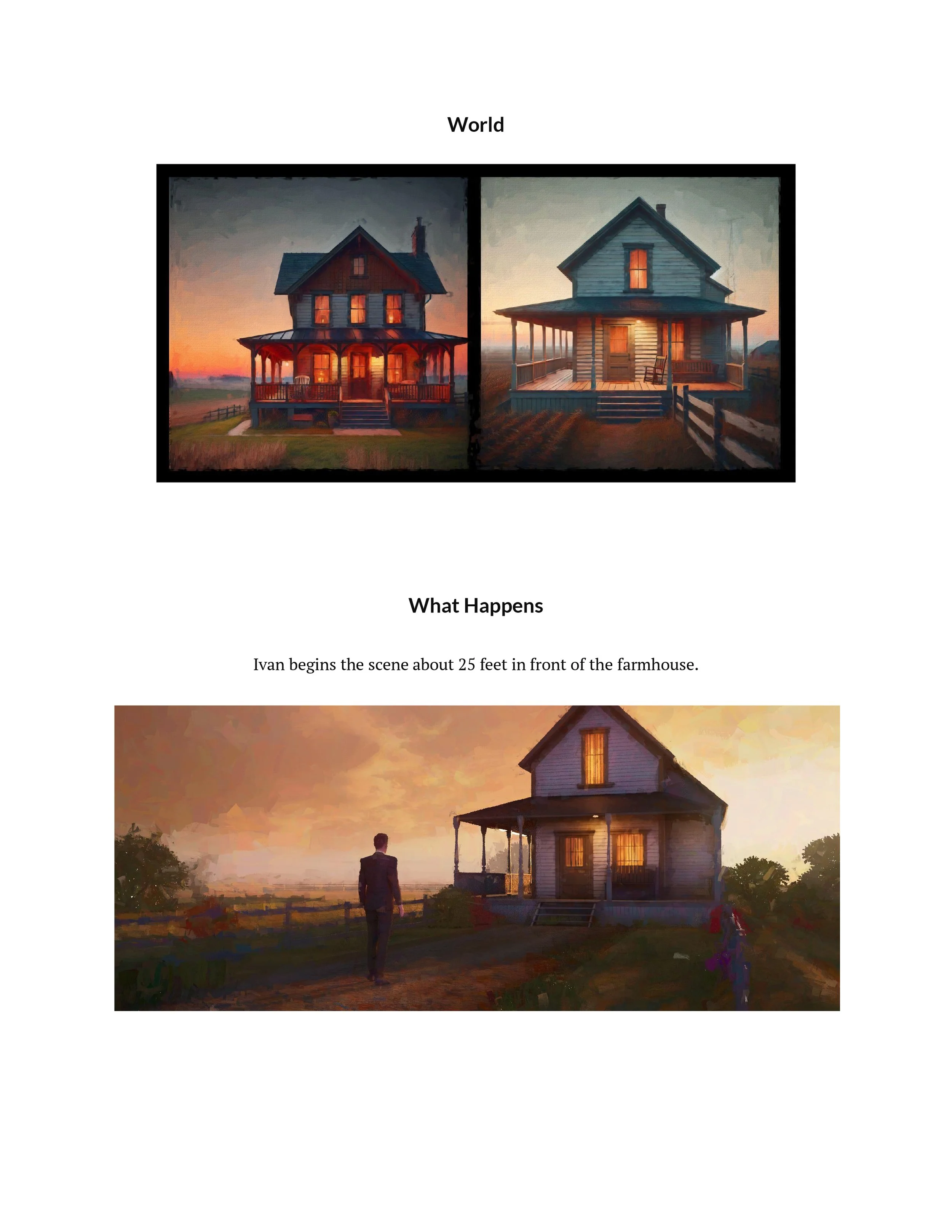
The environment where the story unfolds, what the character will and will not interact with.
World
Actions, animations, and events that drive the scene forward independent of characters, the world and objects.
What Happens
Camera techniques, framing, and movement used to present the scene visually.
How it is shown
Building the places where stories happen, from a pencil line, a sentence, or a reference image.
Phase 1 - World builder
Drawing to 3D. Draw a rectangle and it becomes a box. Sketch an arc over the top and the box takes the curve. No modeling tools, just a pencil.
The simple shape becomes the foundation. Detail builds on top, and it all stays editable: pull the block taller and the floors and windows follow.
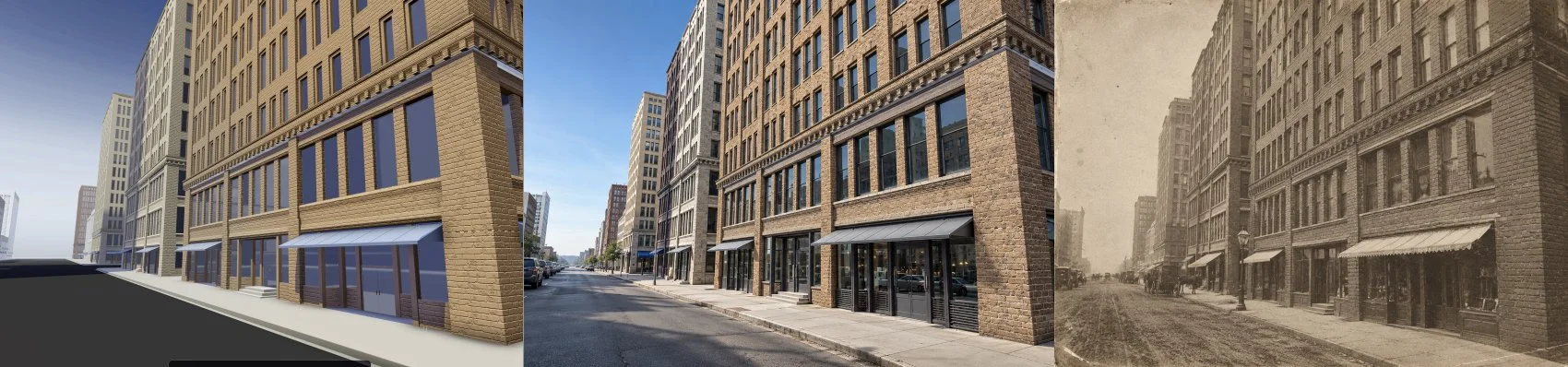
Same scene, three looks (ControlNet, via ComfyUI).
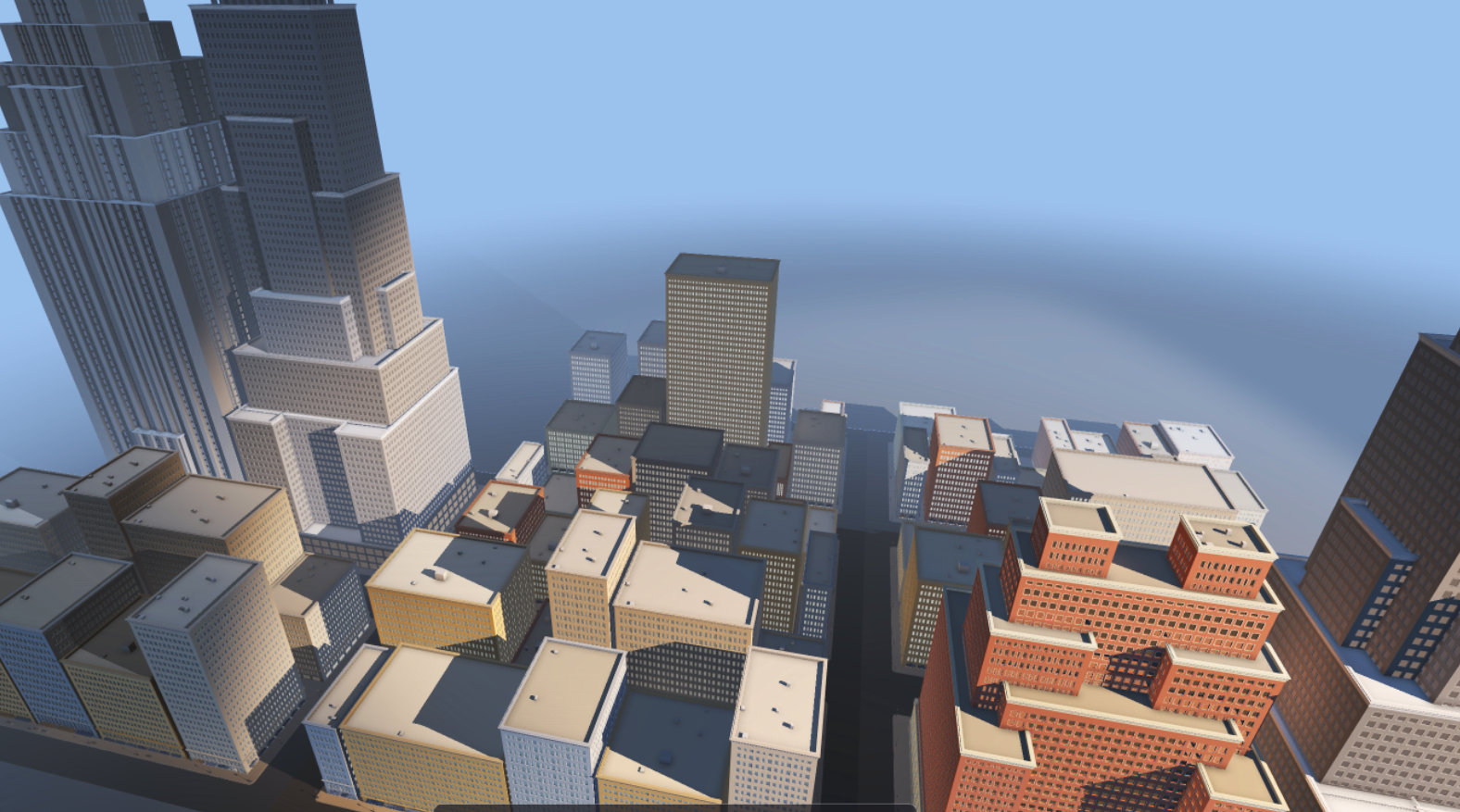
Same city, same camera
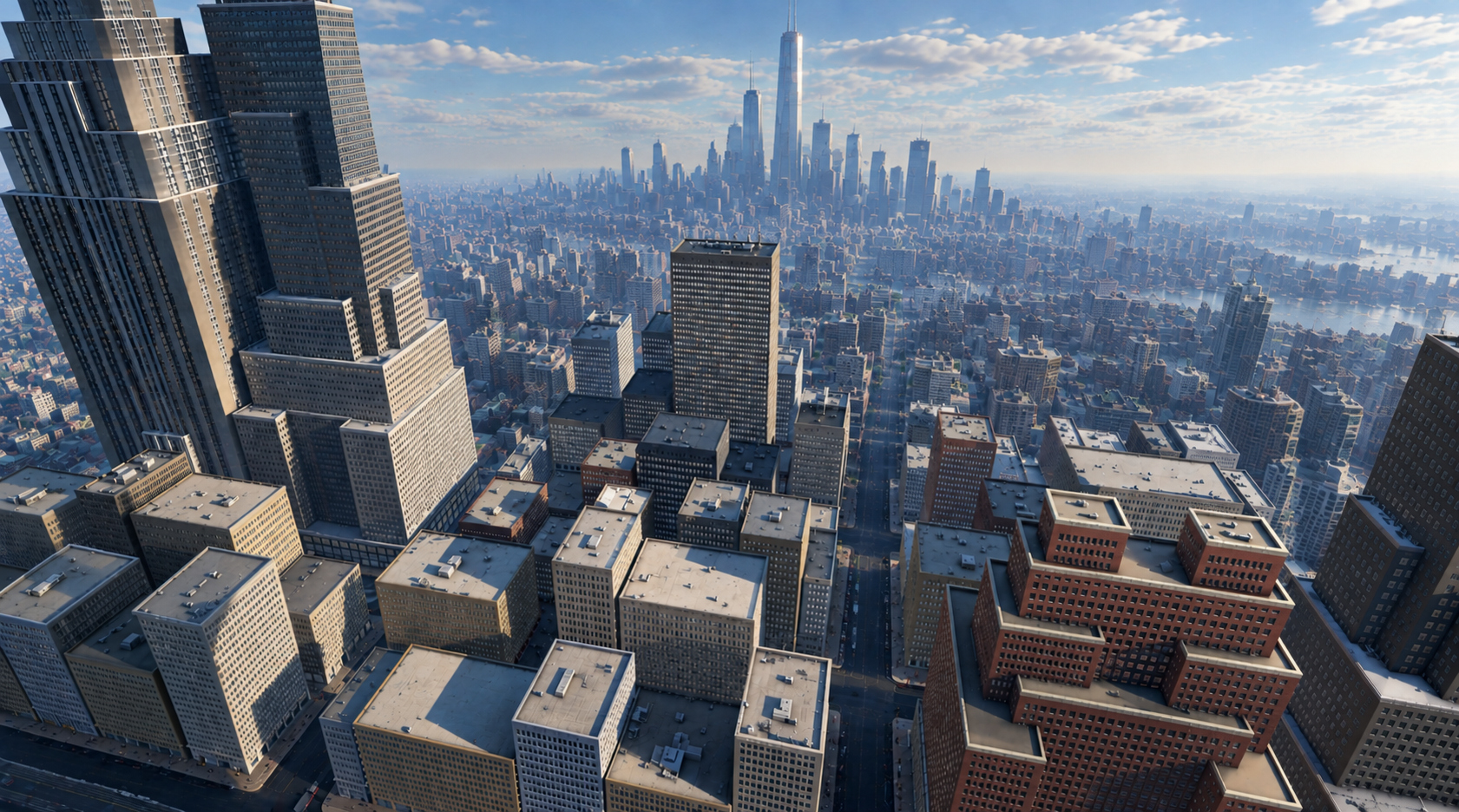
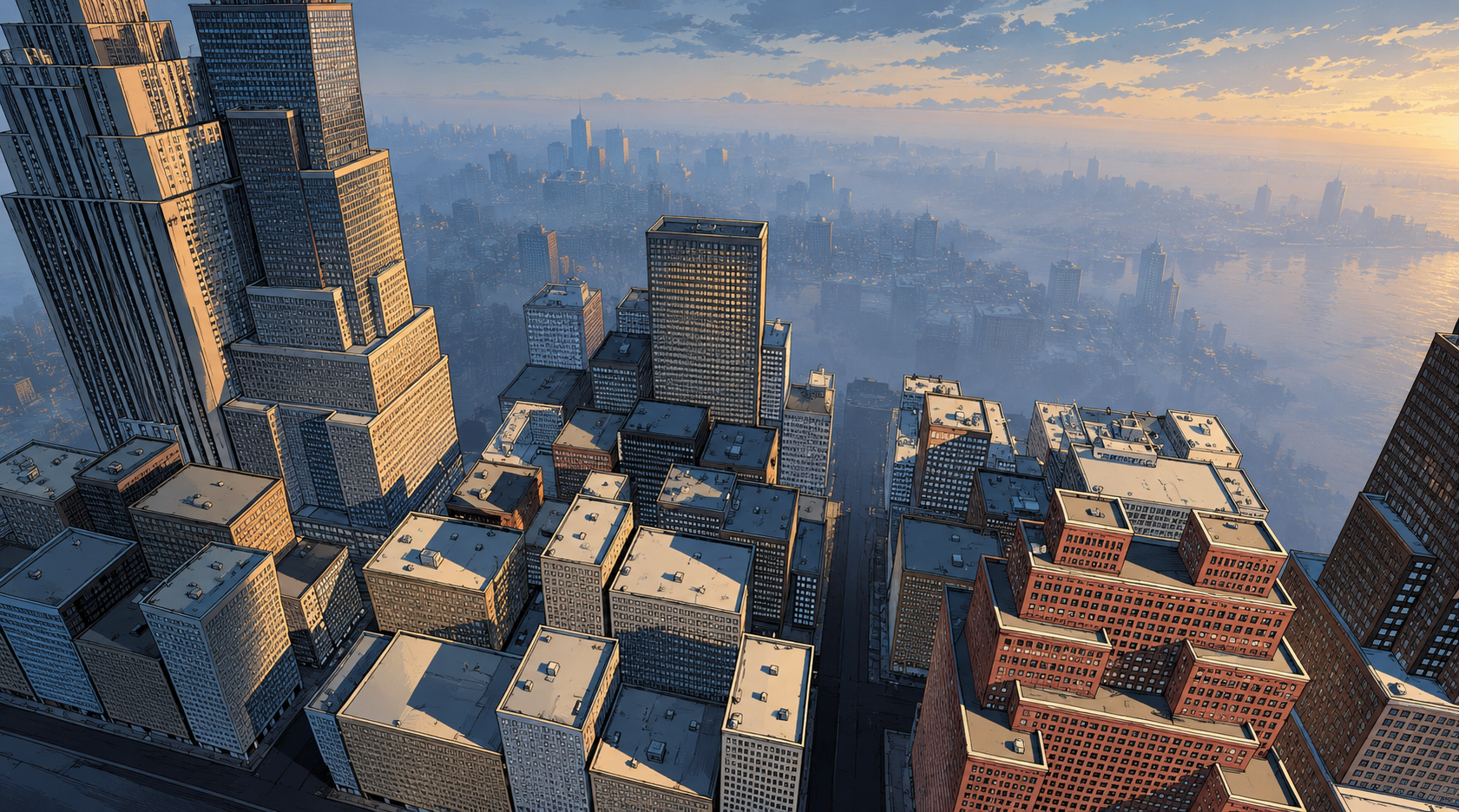
Principles-based modeling. No drawing, no reference image. The LLM builds from a set of modeling principles: limit the part count, then subdivide each part for detail. Different LLMs turn out to have different modeling styles.
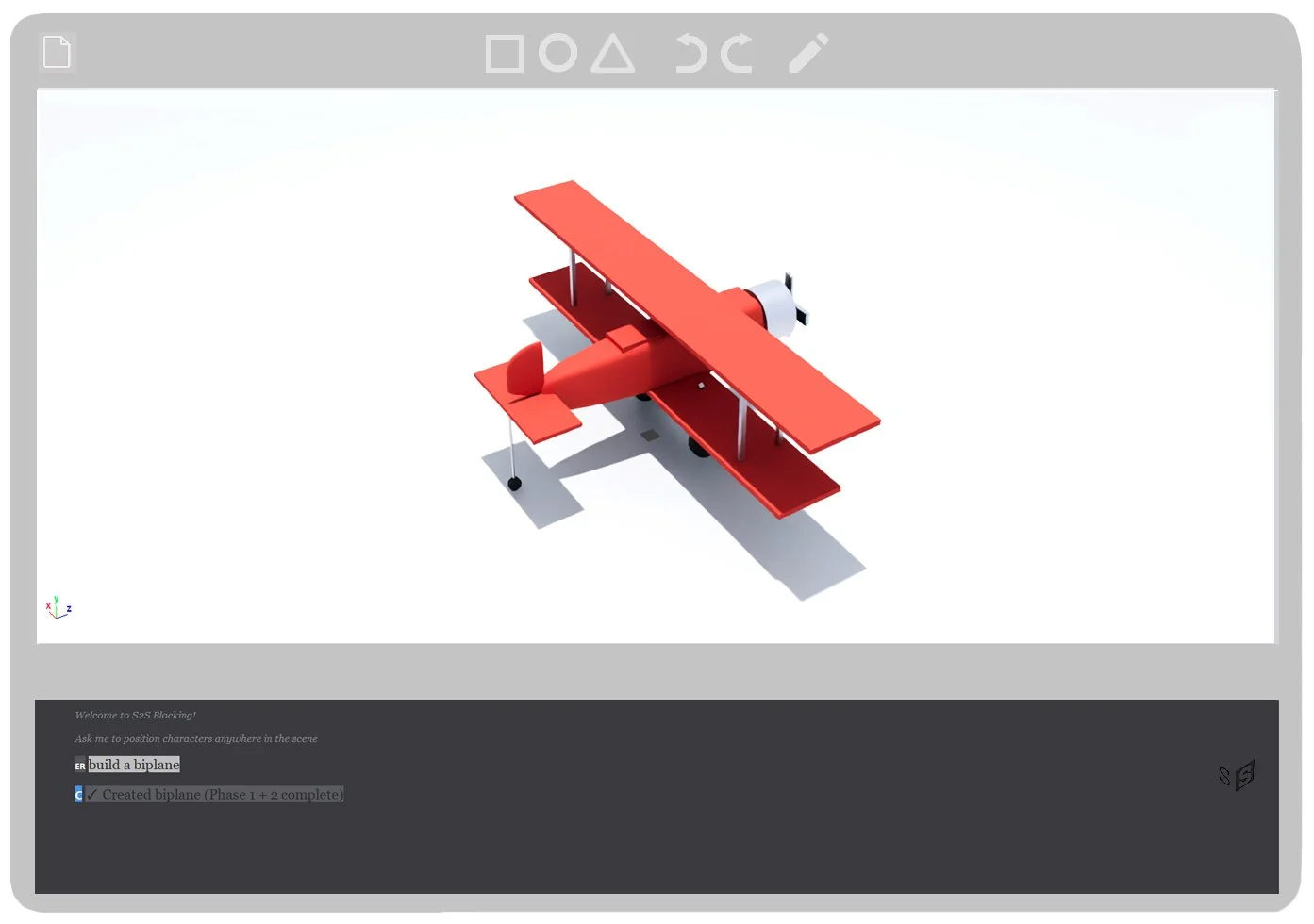
Additionally, inputs such as photos, blueprints, drawings and paintings can be used to create 3D models, more examples to come.
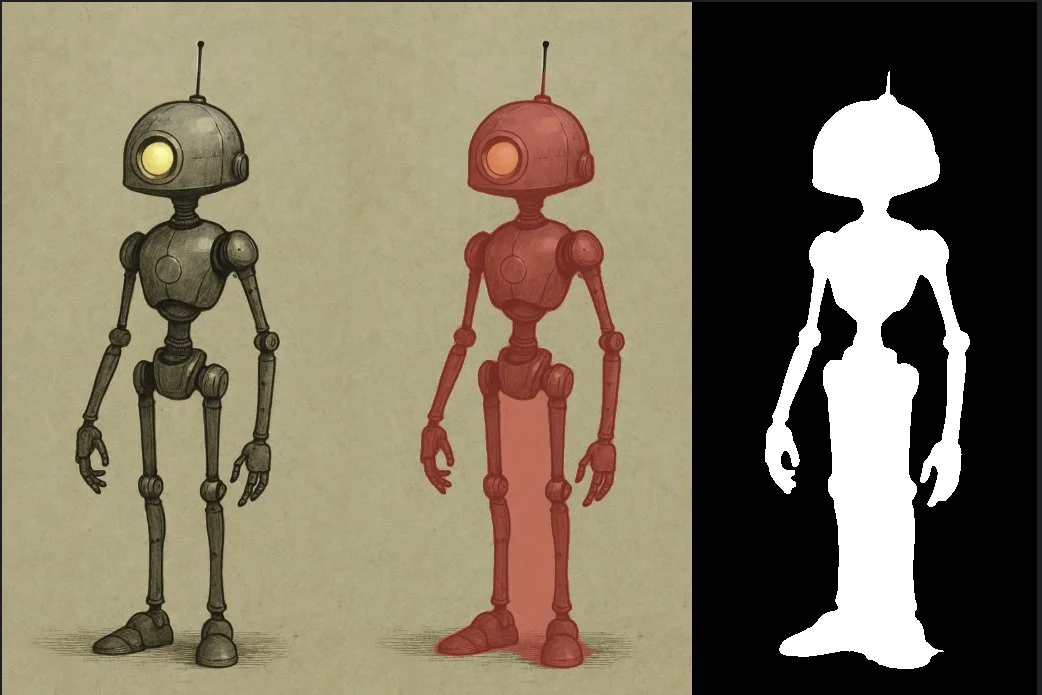
Phase 2: Character - What happens - How it is shown
Phase 2, a step behind Phase 1 by design: each part was prototyped. on a single scene to prove the approach before building it out, and what follows is a glimpse of those prototypes. Ivan comes home at dusk. Abigail is waiting on the porch.
Character, Animation and Camera system
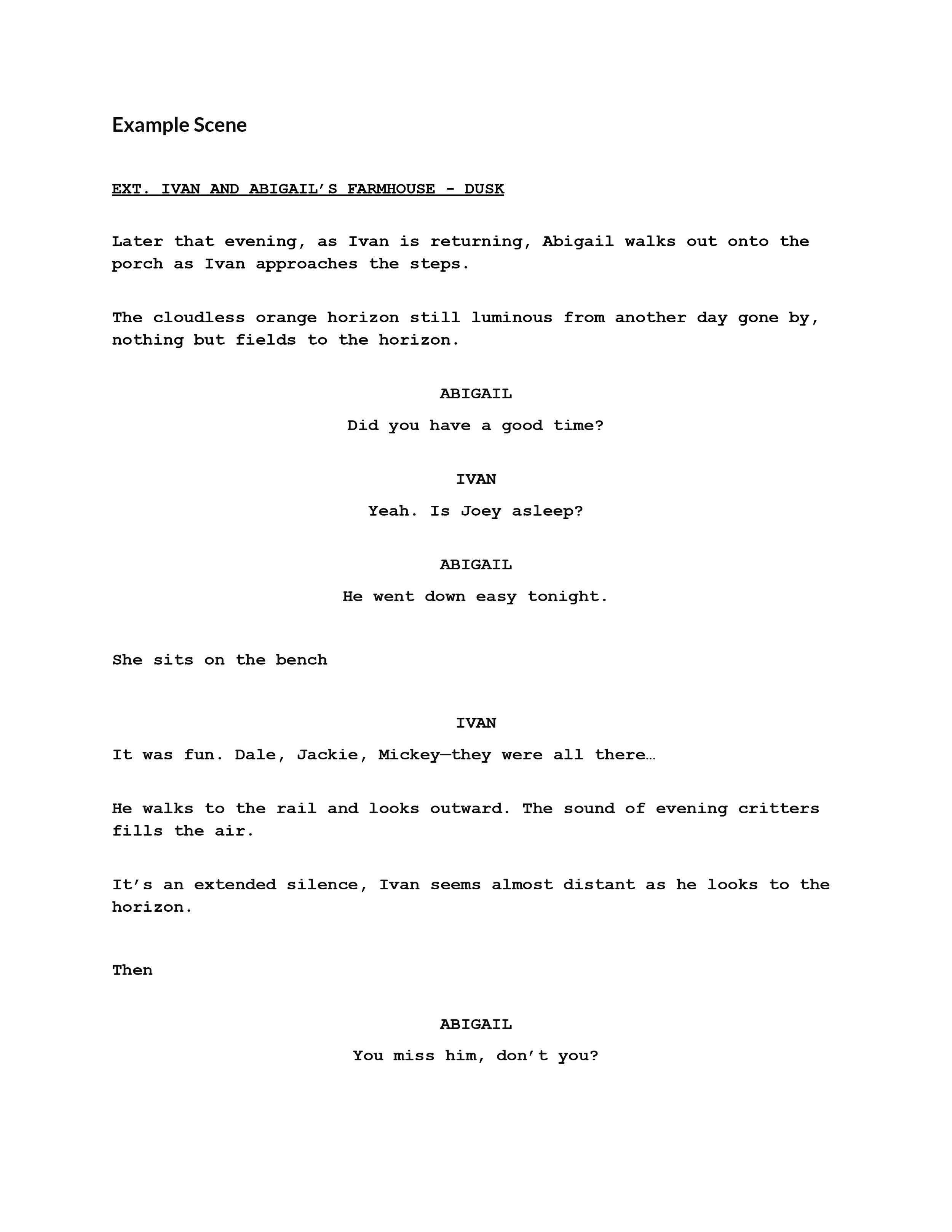
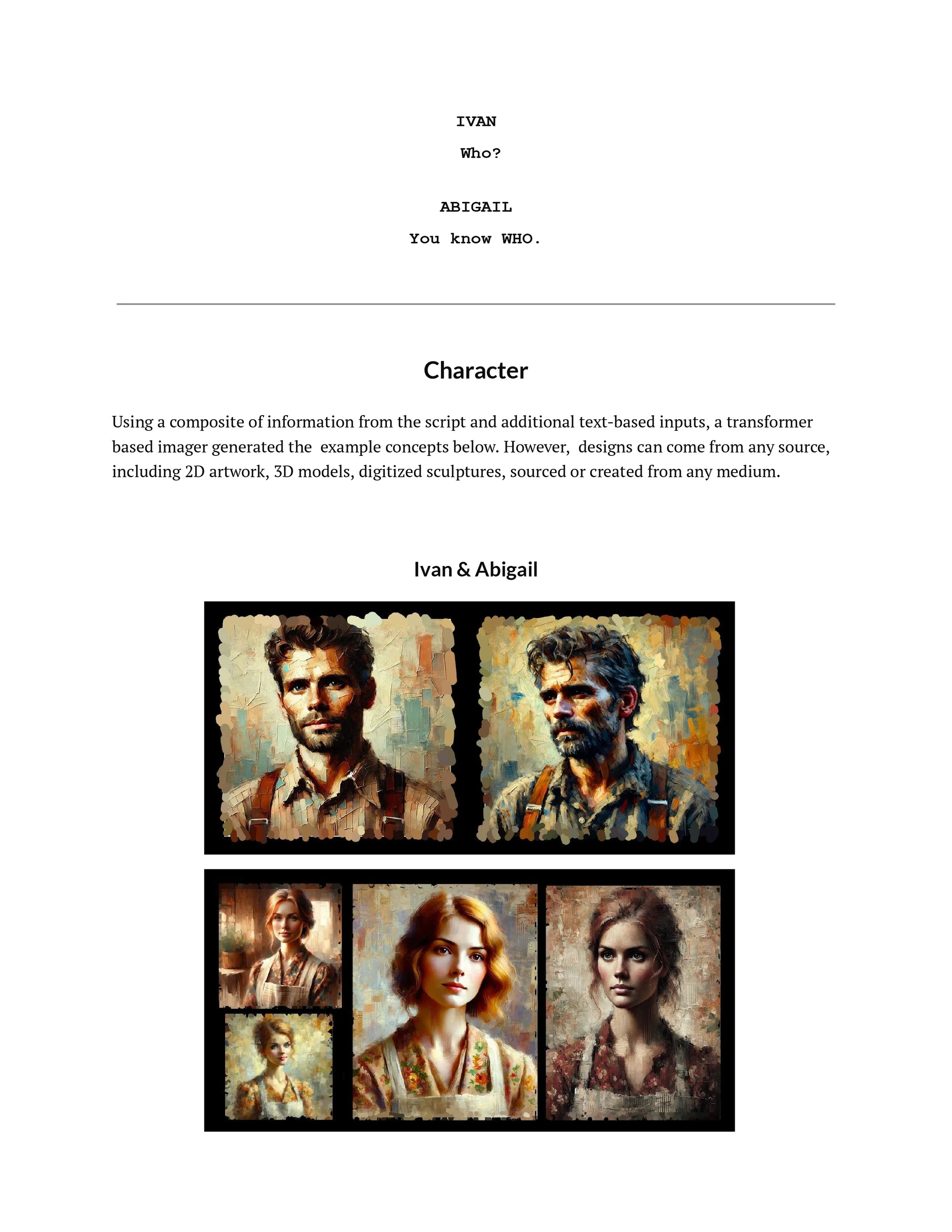
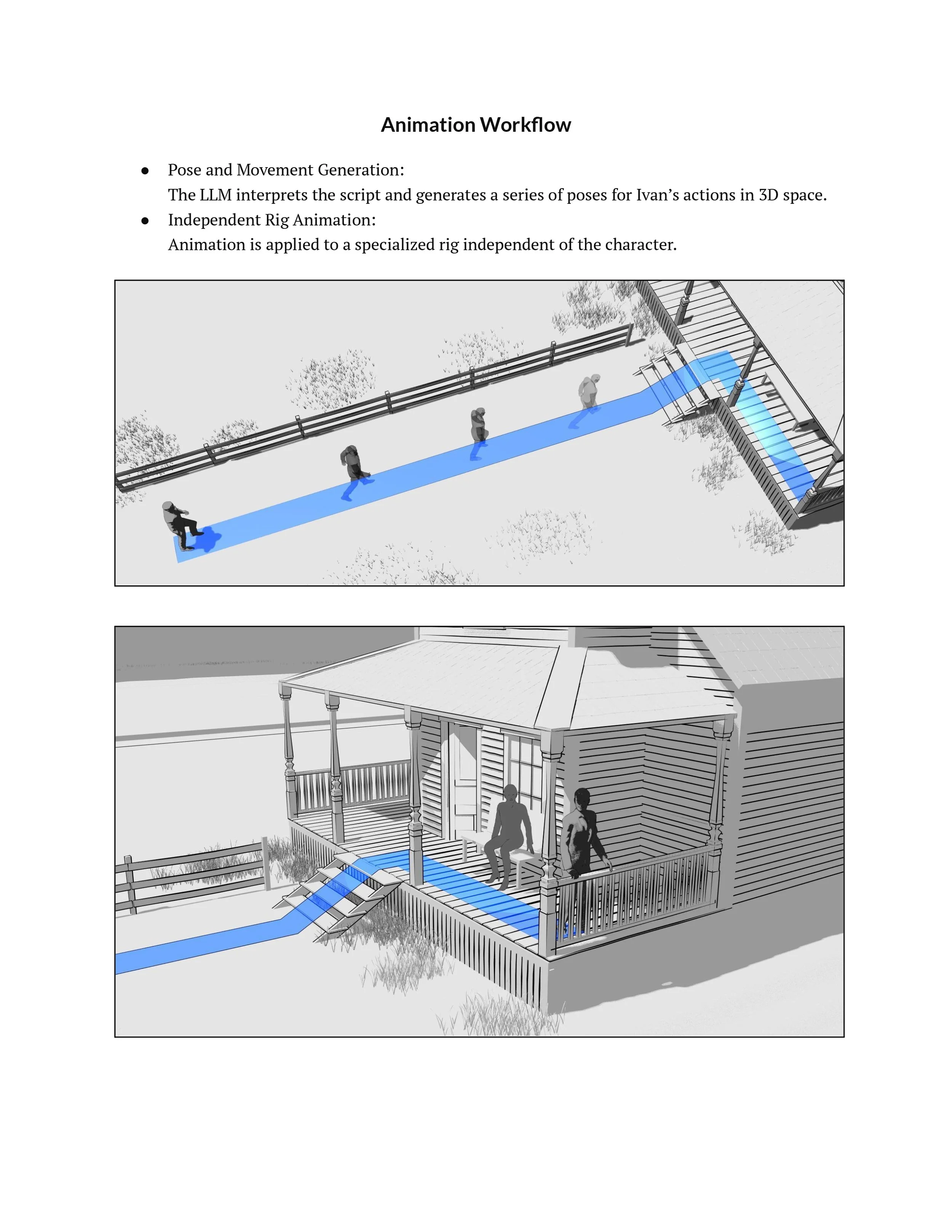
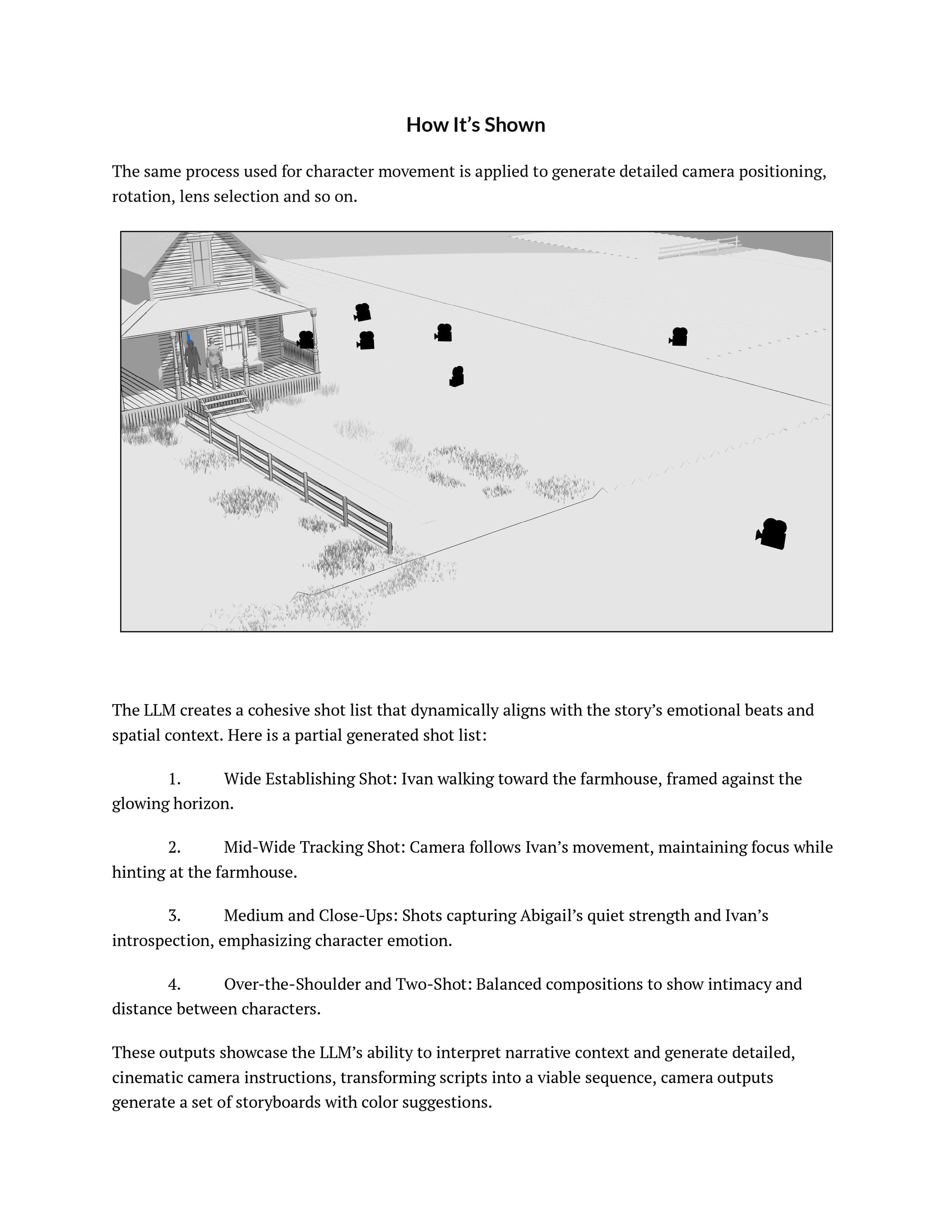
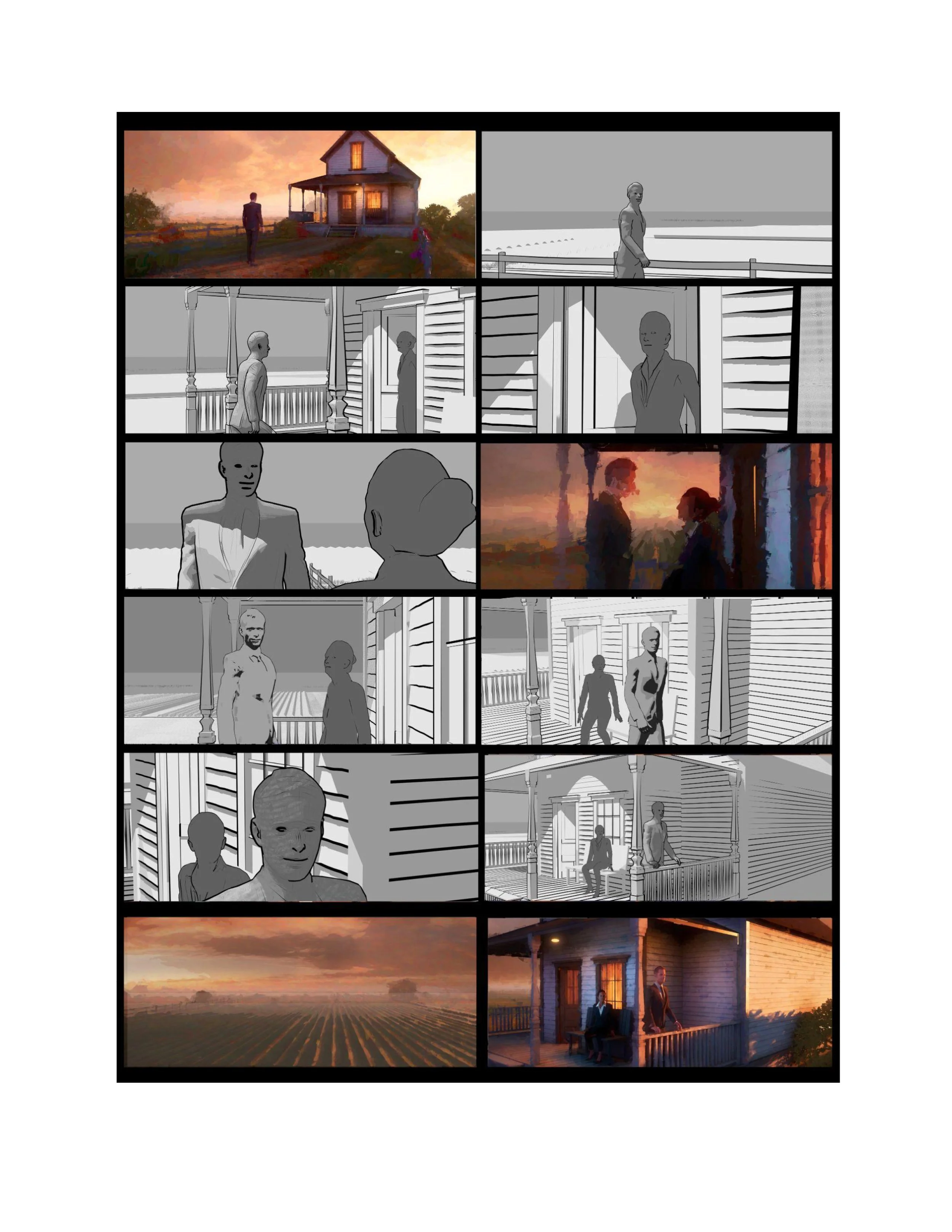
Blocking. A working prototype of the animation and camera system. Draw the path with a pencil, give direction the way you'd give it to an actor, and the shot lands on the timeline. Then edit inside the shot: adjust the walk, change the lens, trim the timing, and everything else holds. Built first on top of Maya to prove the idea; being rebuilt on USD, which is far more open.
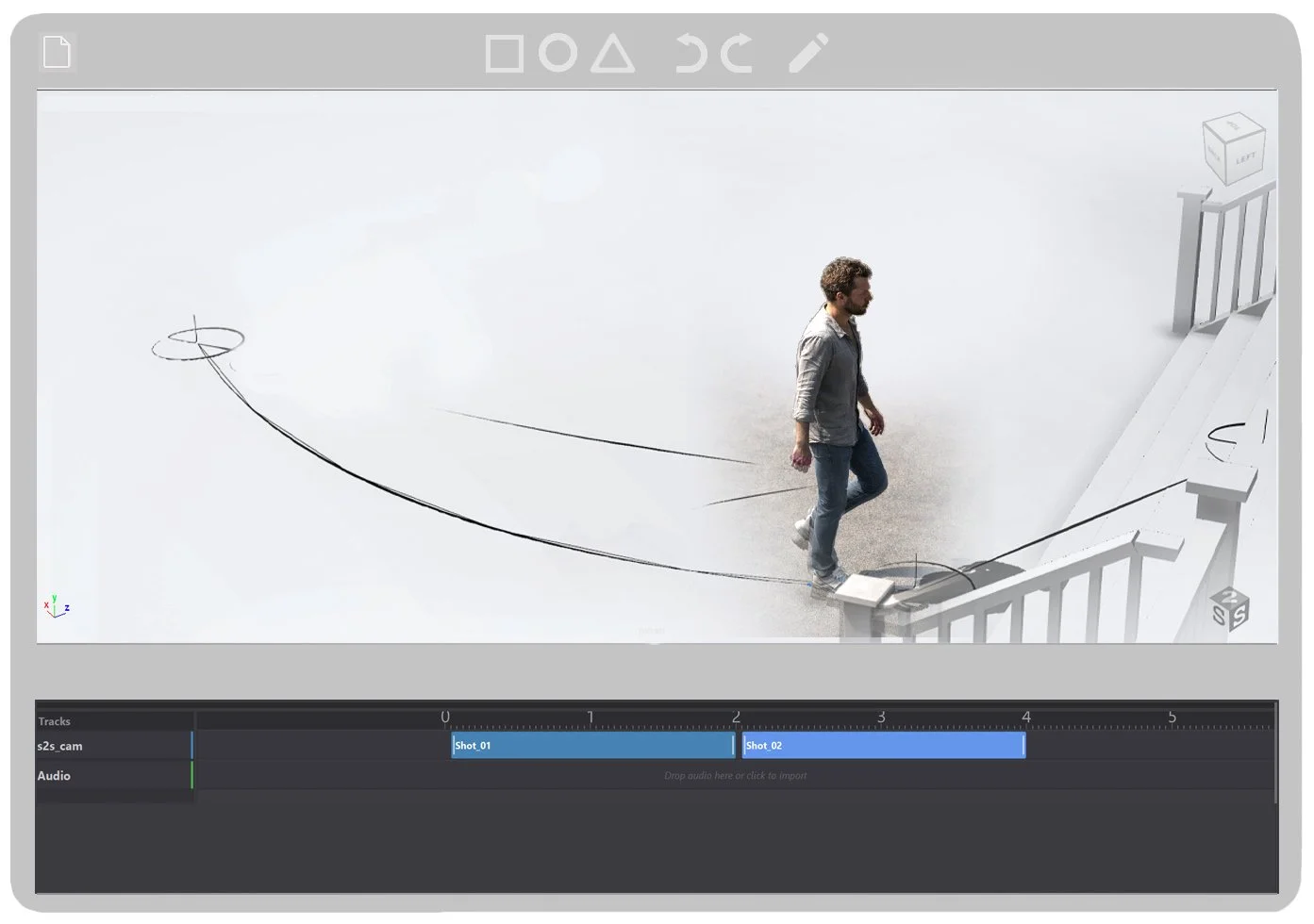
Then cut inside the shot: the camera jumps to a new position and replays the same stretch of the walk from there, or trims it. The performance never changes; only the view of it does.
Non-generative: no scraped IP required.
Continuity by design: character, camera, and screen direction stay consistent.
Production-friendly: clean handoff to common DCCs (2D/3D).